Featured
Hyperscalers Could Battle for the Grid as CAPEX Redefines Global AI Infrastructure
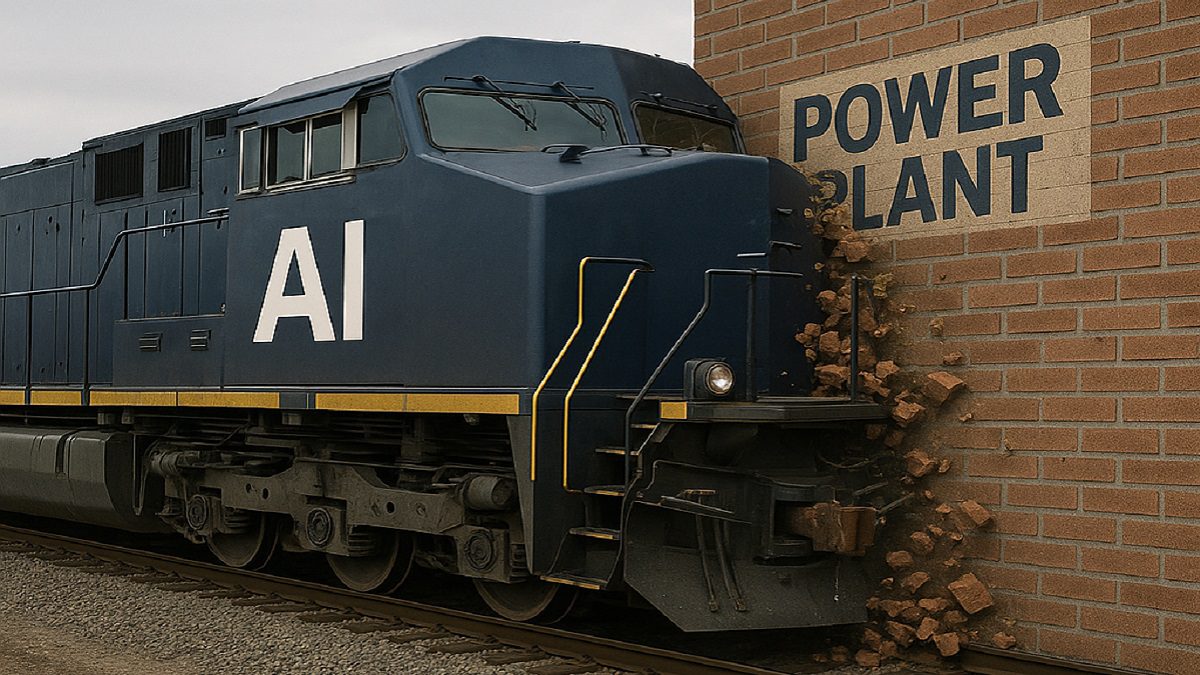
Artificial intelligence is driving a new wave of infrastructure spending among global hyperscalers. Alphabet, Amazon, Meta, Microsoft, Oracle, IBM, and Alibaba are investing hundreds of billions of dollars in data centers, GPUs, and energy systems to meet AI demand. However, the availability of power is emerging as a critical constraint. While companies such as Alphabet and Meta finance expansion through cash flow, Oracle relies on debt, and OpenAI on partnerships. The real bottleneck lies in generating and transmitting electricity, as solar, gas, and nuclear projects take years to build, creating a timing mismatch between spending and power supply.
What used to be perceived as aggressive investments in cloud infrastructure now seems small in comparison to the tidal wave of expenditure fueled by artificial intelligence (AI).
Large technology companies, such as Alibaba (NYSE: BABA), Alphabet (NASDAQ: GOOGL), Amazon (NASDAQ: AMZN), IBM (NYSE: IBM), Meta (NASDAQ: META), Microsoft (NASDAQ: MSFT), and Oracle (NYSE: ORCL), lead this transformation through their massive investments in data center infrastructure, server technology, and power distribution systems for the upcoming decade of computing. With OpenAI (Private), as the catalyst in this ecosystem.
However, behind the headline figures is a more complicated tale: to what extent is this expenditure real, how will it be funded, and can the power grid keep up.
Alphabet Blasting Past Search
The fiscal 2025 projections of Alphabet were a shock to analysts when it increased the anticipated CAPEX to $91 to $93 billion, compared to $75 billion the previous year. The company noted that about 60% of this expenditure will be on servers, and the rest will be on data centers and networking.
This is not a one-off surge. Alphabet has indicated that high CAPEX intensity will persist into 2026 and 2027, and only decline in case efficiency improvements in AI models lower the infrastructure demand.
Funding is easy: the operating cash flow of Alphabet is more than adequate, and although it employs leases and power purchase agreements (PPAs) as a tactic, debt is not the major source of financing.
Meta Now Focusing on the AI-verse
The expenditure pattern of Meta is also aggressive. The company incurred CAPEX of $62.7 billion in the twelve months to Q3/2025, including $18.8 billion in one quarter. The previous guidance of $30 billion now seems quaint.
The approach that Meta is taking is to scale up, despite the fact that power is becoming a limiting factor.
Similar to Alphabet, Meta finances the majority of its CAPEX with operating cash flow, with structured leases and energy contracts. The balance sheet of the company can take the load, but the constraining factor is obtaining reliable power for new campuses and data centers.
Oracle’s Surge From the Back
Oracle’s story is different. CAPEX in fiscal 2025 was $21.2 billion, three times higher than the previous year. Company commentary and analysts indicate a multi-year expansion plan of about $25 billion.
In contrast to Alphabet and Meta, Oracle has been relying on debt to fund this ramp-up. The total debt increased to $10 billion and Net Debt-to-EBITDA is now close to 3.9x. The negative free cash flow was mostly caused by CAPEX, which highlights the fact that Oracle is financing its cloud aspirations with leverage as much as operating cash.
This renders Oracle the most obvious case of debt-funded hyperscaler growth.
Microsoft Spending on All Fronts
Microsoft has become the most aggressive AI arms race spender. It has invested in AI infrastructure, GPUs, custom silicon, and massive data center expansion, with a commitment of $80 billion in CAPEX in fiscal 2025, almost half of which is dedicated to AI infrastructure.
The quarterly expenses have reached between $30 and $35 billion, which is a sign of the skyrocketing demand for Azure and its strong collaboration with OpenAI.
The major source of financing is operating cash flow, but long-lived assets are financed by leases. Microsoft has indicated that it will increase its spending even faster in fiscal 2026, and it will expand its global data center presence by almost twofold. Its $392 billion contract backlog suggests the spending is tied to booked demand rather than speculation.
Ambition Relative to Scale at IBM
IBM’s strategy is small compared with its size. In 2025, it declared a five-year, $150 billion investment strategy, with an average of $30 billion a year, in hybrid cloud, AI, and quantum computing.
This is compared to its historical CAPEX of $1.1 billion in 2024. Funding is complicated: IBM has about $63 billion in total debt outstanding, which restricts its cash flow financing capacity compared to its expenditure goals.
Analysts anticipate a combination of cash flow, debt, and perhaps an equity issue. The pivot will reposition IBM as an AI-driven enterprise services leader, although the execution risk is high due to slower revenue growth and high dividend payments.
AI is Alibaba’s Second Act
Alibaba has announced AI as its second act, moving away from e-commerce to cloud and generative AI. In 2025, it announced a three-year, $53 billion AI CAPEX strategy, centered on international data centers, custom AI chips, and expanding its Qwen language models.
It is projected to be financed through operating cash flow and regional alliances, but U.S. chip sanctions compel it to use domestic options.
Alibaba Cloud is also establishing itself as a super AI platform, and AI services already contribute 20% of cloud revenue. Its ambition is evidenced by expansion into Europe, Southeast Asia, and Latin America despite geopolitical limitations.
Amazon Increasing AI Capacity at AWS
Amazon is about to enter its biggest investment period since the initial AWS construction. It budgeted a CAPEX of $100 billion in 2025, up dramatically from the previous year. The company is in a good liquidity position, and operating cash flow is sustaining the surge, but Free Cash Flow has already become negative in certain quarters, which is indicative of the burden of these investments.
CEO Andy Jassy has called the surge a once-in-a-lifetime opportunity, betting that AWS, with its increased AI capacity, will win long-term enterprise deals despite near-term margins getting tighter.
OpenAI: Beyond Balance Sheet Ambition
The most misconstrued numbers are those of OpenAI. Filings and credible analysis do not back up headlines that there is $1 trillion in CAPEX.
OpenAI is not a hyperscaler in itself; its direct corporate CAPEX is small relative to partners such as Microsoft and Nvidia (NASDAQ: NVDA).
What is there are ecosystem projections: Nvidia plans of $100 billion of GPU systems, Microsoft plans of multi-year data center expansions, and hypothetical Stargate projects of up to $500 billion.
The role of OpenAI is catalytic, and partners contribute to the financing to a large extent. Its operations are supported by equity and debt facilities, yet the trillion-dollar figure is more of the collective AI ecosystem than OpenAI.
FIGURE 1: Data Centre Electricity Consumption (2020-2030)

Source: IEA. Energy and AI Report (April 2025)
The Real Bottleneck is Power
When there is a lot of money, there is no power. AI workloads are energy-intensive, and the CAPEX of a hyperscaler becomes a direct conversion of gigawatts of power consumption. RAND projects that AI data centers around the world may require 10 GW of additional capacity in 2025, and 68 GW in 2027.
One training location could have a requirement for 1GW by 2028 and 8GW by 2030. OpenAI’s most concrete public figure is 10 GW for a strategic initiative, equivalent to 10 nuclear reactors.
The grid in North America currently has 1.3 TW of natural gas, coal, nuclear, hydro, wind, and solar installed capacity, with each contributing a significant portion. However, installed capacity does not equal available power. Bottlenecks in transmission, interconnection queues, and equipment shortages imply that it is much slower to add new power than to announce new data centers.
What is the Time to Build Power?
The new generation timelines highlight the difficulty:
- Solar (1 GW utility-scale): Small farms can be constructed within less than a year; however, a real 1 GW portfolio requires several locations and interconnections. In constrained areas, realistic timelines are 2 to 3 years.
- Gas (1GW combined cycle): The construction of the gas-fired power plant has traditionally required 2 to 4 years, although the backlog of turbines and delays in obtaining permits are shifting some of the projects to 2030.
- Nuclear (1GW type): The average time to build a new reactor in the world is 9 years. The first small modular reactor (SMR) of 300 MW in Ontario is planned to be completed in 2029, with a total of four units representing approximately 1.2 GW by 2030. Nuclear is the slowest and surest.
These schedules are important since hyperscaler CAPEX is front-loaded. Alphabet and Meta are investing today, Oracle is using debt, and partners of OpenAI are building today. However, the electricity required to operate these plants might not be available until many years later.
Financing the AI Future
The mix of financing is a corporate strategy. Alphabet and Meta are cash flow-based, Oracle is debt-based, and OpenAI is partner-based. But they are all limited by the same thing: power.
Debt can purchase servers, but not accelerate the production of turbines or the authorization of transmissions. Data centers can be financed with cash, but gigawatts of clean energy cannot be created overnight.
Final Thoughts: CAPEX Meets Infrastructure
In five years, AI spending will have pushed the boundaries of corporate balance sheets and national grids. Hyperscaler planned CAPEX is enormous. The bottleneck is power.
AI demand is now being measured in gigawatts, but new generation capacity requires years. Solar can be scaled within two to three years, gas within four, and nuclear within almost a decade.
The mismatch between spending timelines and build timelines is the defining challenge of the AI era.